
The spine is a complex structure made up of vertebraee, discs, joints, ligaments, and delicate neural elements that allow the body to move, function, and communicate with the brain. When any part of this system becomes injured, compressed, or degenerative, it can result in pain, weakness, numbness, or loss of mobility. Understanding the underlying condition is the first step toward effective treatment and long-term relief.
At Princeton Neurological Surgery, patients in Hamilton, NJ and Jersey City receive comprehensive evaluation and advanced treatment for a full range of spinal conditions. The practice is guided by Dr. Edward H. Scheid, Jr., a board-certified neurosurgeon who has performed more than 6,000 successful spine surgeries. Using a precise, step-by-step diagnostic approach, the team focuses on identifying the exact source of symptoms and developing individualized treatment plans designed to preserve neurologic function and improve quality of life.
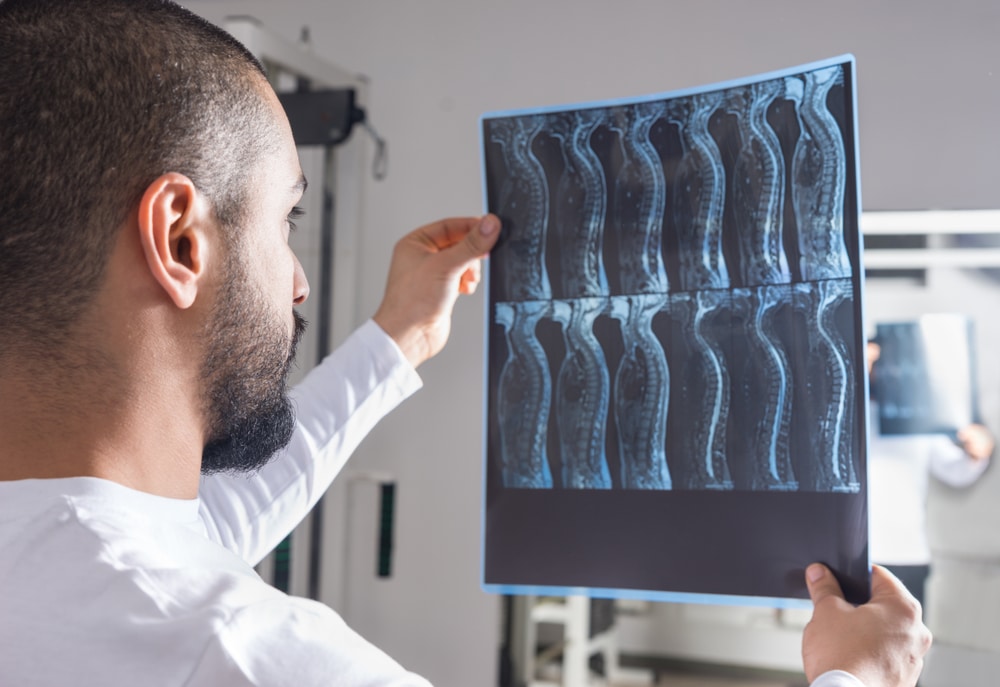
Spine Conditions We Treat
Below is an overview of the spinal conditions treated at Princeton Neurological Surgery.
Bone Spurs
Bony growths that develop due to arthritis or degeneration and may narrow the spinal canal or compress nearby nerve roots.
Bulging Disc
A disc that extends beyond its normal boundary without rupture. Bulging discs may cause nerve irritation if they narrow nearby spaces.
Cauda Equina Syndrome
A medical emergency caused by compression of the nerve roots at the base of the spine, leading to bowel or bladder dysfunction, weakness, and numbness.
Cervical Myelopathy
Compression of the spinal cord in the neck, often due to degenerative changes, leading to balance issues, hand dysfunction, and weakness.
Cervical Radiculopathy
Nerve root compression in the cervical spine causing arm pain, numbness, tingling, or weakness.
Degenerative Disc Disease
Age-related breakdown of spinal discs that may lead to pain, instability, or nerve compression.
Disc Protrusion
A localized extension of disc material that may irritate adjacent nerve roots.
Discogenic Back Pain
Chronic back pain originating from degeneration or inflammation within the intervertebrael disc itself.
Foot Drop
Weakness in lifting the front part of the foot, often caused by lumbar nerve compression or peripheral nerve injury.
Herniated Disc
A rupture of the outer disc wall allowing inner material to press on nerve structures, frequently causing arm or leg pain.
Kyphosis
Abnormal curvature of the spine that can cause postural deformity, pain, or neurologic symptoms in severe cases.
Pinched Nerve
Compression or irritation of a spinal nerve root resulting in radiating pain, numbness, or weakness.
Radiculopathy
Dysfunction of a nerve root caused by compression or inflammation, producing pain or neurologic symptoms along the nerve’s distribution.
Sciatica
Pain radiating from the lower back into the leg due to compression of the sciatic nerve or its roots.
Slipped Disc
A common term used to describe a herniated or displaced spinal disc causing nerve compression.
Spinal Cyst
A fluid-filled sac within or around the spinal canal that may compress nerve roots as it enlarges.
Spinal Hematoma
A collection of blood within the spinal canal that compresses the spinal cord and requires urgent evaluation.
Spinal Metastases
Cancer that has spread to the spine, potentially compromising spinal stability or compressing neural elements.
Spinal Stenosis
Narrowing of the spinal canal that places pressure on the spinal cord or nerve roots.
Spinal Tumor
An abnormal growth within or around the spine that may be benign or malignant and can affect nerve function.
Spondylolisthesis
Forward slippage of one vertebrae over another, often causing instability and nerve compression.
Spondylosis
Degenerative arthritis of the spine resulting in stiffness, pain, and possible nerve or spinal cord compression.
Spinal Cord Injury
Damage to the spinal cord from trauma or degenerative compression that may result in weakness, paralysis, or loss of sensation.
Why Choose Princeton Neurological Surgery For Spine Care?
Princeton Neurological Surgery is guided by Dr. Edward H. Scheid, Jr., a board-certified neurosurgeon and President and Founder of NeuroSpine Plus, LLC. With decades of experience and thousands of successful spine surgeries performed, the practice offers both minimally invasive and complex surgical solutions when appropriate.
Each patient undergoes a thorough neurological evaluation and detailed imaging review before treatment recommendations are made. Conservative management is pursued whenever possible, and surgical intervention is reserved for cases where it is clearly indicated. The goal is always to relieve pain, preserve neurologic function, and restore mobility through personalized care.
When to Seek Evaluation for Spine Symptoms
Back pain, neck pain, and nerve symptoms can come from many different spine conditions. Some improve with time and conservative care, while others need a closer look to prevent worsening pain, weakness, or neurological changes. Our team at Princeton Neurological Surgery evaluates conditions we treat by reviewing your symptoms, physical exam, imaging, and how the condition affects daily function.
You should consider a spine evaluation if pain travels into the arm or leg, numbness or tingling does not improve, weakness develops, balance changes occur, or symptoms begin limiting walking, work, sleep, or normal activity. Sudden bowel or bladder changes, severe weakness, or numbness around the groin or saddle area should be treated as urgent.
Spine Condition FAQs
Comprehensive Spine Care In Hamilton, NJ
Spinal conditions can range from mild degenerative changes to urgent neurological emergencies. Early diagnosis and expert treatment are essential to preventing progression and long-term complications.
Princeton Neurological Surgery provides advanced spine care in Hamilton, NJ and serves patients from Jersey City and surrounding communities. To schedule a consultation and discuss your symptoms, call Princeton Neurological Surgery in Hamilton, NJ at (609) 890-3400 today.