
A spinal cyst is a fluid-filled sac that develops within or around the spinal canal, often as a result of age-related degeneration. While many spinal cysts are benign and slow growing, their location near the spinal cord and nerve roots means they can cause significant discomfort if they enlarge or compress nearby structures.
At Princeton Neurological Surgery, patients in Hamilton, NJ and Jersey City receive comprehensive evaluation and treatment for spinal cysts and other degenerative spine conditions. The practice is guided by the leadership of Dr. Edward H. Scheid, Jr., a board-certified neurosurgeon who has performed more than 6,000 successful spine surgeries. Through a careful and individualized diagnostic approach, the team works to determine the type of cyst present and whether it requires monitoring or intervention.
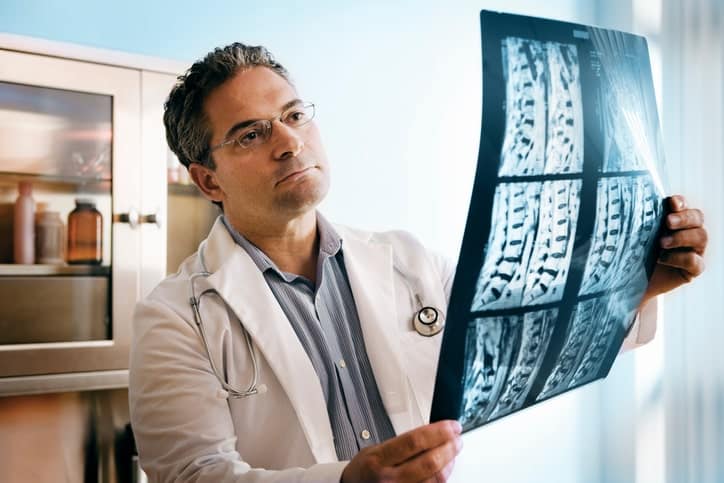
Types Of Spinal Cysts
Several types of cysts can develop in the spine. The most common are synovial cysts, which form in the facet joints as cartilage wears away and excess joint fluid accumulates. This fluid becomes trapped within the joint lining, creating a cyst.
Other types include:
- Arachnoid cysts
- Tarlov cysts
- Extramedullary cysts
Each type differs in origin and location, but all have the potential to affect nearby nerves if they enlarge.
As a cyst grows, it may narrow the spinal canal and contribute to spinal stenosis, particularly in the lumbar (lower back) or cervical (neck) regions.
Signs And Symptoms Of A Spinal Cyst
Small, stable cysts may not cause symptoms and are often discovered incidentally on imaging studies. When symptoms occur, they are typically related to nerve compression.
Common symptoms include:
- Back pain
- Cramping
- Numbness
- Radiating leg pain
Pain may worsen with prolonged standing or remaining in one position. Some patients find relief by sitting, leaning forward, or frequently changing positions.
If spinal stenosis develops as a result of cyst growth, symptoms may gradually worsen over time.
How Spinal Cysts Are Treated
Treatment depends on symptom severity and cyst progression.
If the cyst is not causing pain or neurological symptoms, observation and periodic imaging may be appropriate.
For symptomatic cysts, non-surgical treatment may include:
- Facet joint steroid injections
- Epidural steroid injections
These injections reduce inflammation and may temporarily relieve pain. In some cases, the cyst may be accessed during the injection procedure.
When Is Spinal Cyst Surgery Recommended?
Surgery may be considered when a cyst causes significant pain, progressive neurological symptoms, or limits daily activities.
Surgical treatment most commonly involves decompression, which removes the cyst and relieves pressure on the affected nerve structures. In some cases, spinal fusion may be performed to stabilize the joint and reduce the risk of cyst recurrence.
Surgery is typically reserved for patients whose symptoms persist despite conservative care or who wish to return to physical activities with less pain and improved function.
Why Choose Princeton Neurological Surgery For Spinal Cyst Treatment?
Princeton Neurological Surgery is guided by the expertise of Dr. Edward H. Scheid, Jr., a board-certified neurosurgeon and President and Founder of NeuroSpine Plus, LLC. With extensive experience treating degenerative spine conditions, spinal stenosis, and nerve compression disorders, the practice offers advanced, image-guided surgical and non-surgical options for spinal cyst management.
What distinguishes the team is its methodical and patient-centered approach. Each patient undergoes a thorough evaluation to determine the type of cyst, its location, and its impact on nerve structures before a customized treatment plan is developed. Minimally invasive techniques are utilized when appropriate, with a focus on relieving compression while preserving spinal stability. Patients in Hamilton and Jersey City benefit from experienced, compassionate spine care close to home.
Spinal Cyst Treatment In Hamilton, NJ
Spinal cysts can range from harmless findings to sources of significant nerve compression. Early evaluation helps determine whether monitoring or intervention is the best course of action.
We welcome patients at our convenient New Jersey office locations in Hamilton, Paramus, Edison, North Bergen, Jersey City, and Mount Laurel, making it easier to access expert spine care close to home.
Princeton Neurological Surgery provides advanced spine care in Hamilton, NJ and serves patients from Jersey City and surrounding communities. To schedule a consultation, call Princeton Neurological Surgery in Hamilton, NJ at (609) 890-3400 today.