
The term “slipped disc” is commonly used to describe a problem involving one of the intervertebrael discs in the spine. These discs sit between the vertebraee and act as shock absorbers, allowing flexibility and cushioning during movement. Although the disc does not literally “slip,” the phrase typically refers to a disc herniation, where the inner gel-like core ruptures through the outer layer and presses on nearby nerves.
At Princeton Neurological Surgery, patients in Hamilton, NJ and Jersey City receive comprehensive evaluation and treatment for slipped discs and other spinal conditions. The practice is guided by the leadership of Dr. Edward H. Scheid, Jr., a board-certified neurosurgeon who has performed more than 6,000 successful spine surgeries. Using a precise and individualized diagnostic approach, the team works to identify the anatomical source of nerve compression and develop a treatment plan tailored to each patient’s condition and goals.
What Happens When A Disc “Slips”?
A slipped disc most often occurs as a result of degenerative disc disease, when the integrity of the disc weakens over time. Injury, improper lifting, smoking, and obesity can also increase risk.
When the outer disc wall tears, the inner core may protrude outward and place pressure on nearby nerve roots. This compression can lead to:
- Pain
- Numbness
- Tingling
- Weakness in an arm or leg
Slipped discs are most common in the lumbar (lower back) and cervical (neck) regions.
Signs And Symptoms Of A Slipped Disc
Symptoms vary depending on disc location and the degree of nerve involvement.
Cervical slipped discs may cause:
- Neck pain
- Shoulder pain
- Arm or hand numbness
- Tingling in the fingers
Lumbar slipped discs may cause:
- Lower back pain
- Buttock pain
- Leg pain, often referred to as sciatica
- Numbness or tingling in the foot
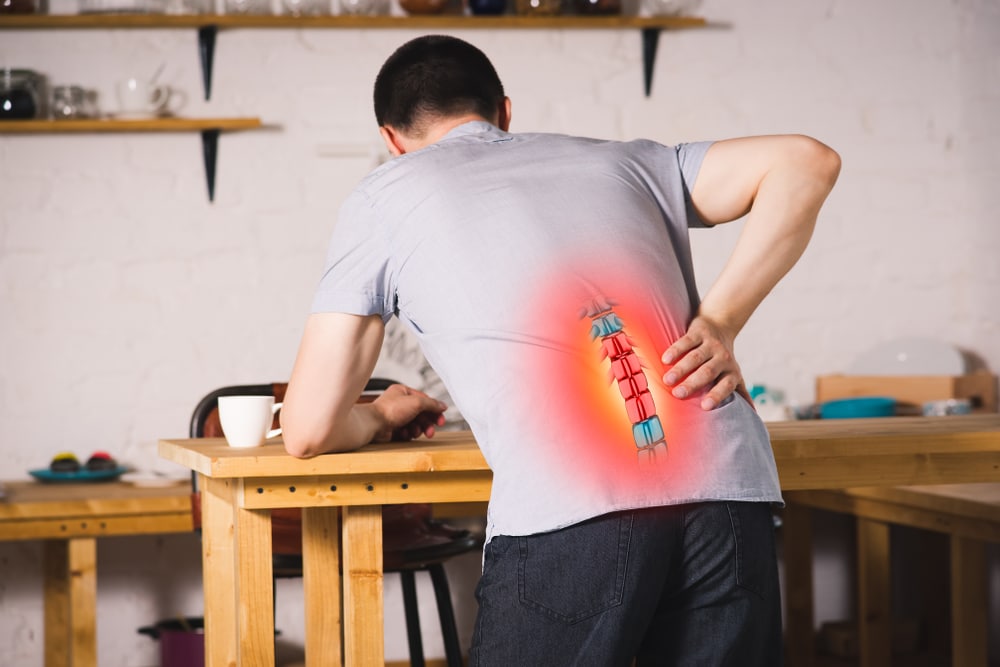
If no nerve is compressed, symptoms may be minimal or absent. However, sustained weakness, persistent numbness, or severe pain should prompt neurosurgical evaluation.
How A Slipped Disc Is Diagnosed
Diagnosis begins with a detailed discussion of symptoms. Your provider will ask about:
- The location and pattern of pain
- Tingling or numbness
- Prior injury or trauma
- Movements that worsen symptoms
A physical examination evaluates muscle strength, reflexes, posture, and nerve function. Imaging studies such as MRI or CT scans are commonly used to confirm disc herniation and identify nerve compression. In some cases, a discogram may be performed to assess specific disc involvement.
Surgery is not considered unless a clear anatomical cause for symptoms can be identified.
When Is Surgery Necessary?
Conservative treatments are always the first line of care. These may include:
- Physical therapy
- Weight management
- Anti-inflammatory medications
- Corticosteroid injections
Surgery is considered when symptoms become chronic, progressive, or associated with significant weakness and conservative measures have failed.
Procedures are not exploratory. Surgical intervention is only recommended when imaging confirms a structural lesion responsible for nerve compression. The objective is to decompress the affected nerve root and, when necessary, stabilize the spine.
Surgical Treatment Options
Several procedures may be used depending on the specific condition:
- Microdiscectomy to remove the portion of the disc pressing on a nerve
- Laminectomy or laminotomy to create more space around nerve structures
- Spinal fusion to stabilize adjacent vertebraee
- Artificial disc replacement in select cases
Microdiscectomy is often minimally invasive and preserves most of the disc structure.
Recovery After Slipped Disc Surgery
Recovery depends on the specific procedure performed.
Patients undergoing microdiscectomy or laminotomy often begin walking the same day and may return to work within a week, depending on activity demands. Spinal fusion requires a longer recovery period, typically three to six months for bone healing and stabilization. Activity levels are gradually increased under medical guidance. Pain levels and functional improvement help guide recovery progression.
What Happens If A Slipped Disc Is Left Untreated?
Some individuals with disc herniations experience no symptoms and may not require treatment. However, when a disc compresses a nerve root and symptoms persist, failure to address the problem can lead to worsening pain, progressive weakness, and decreased quality of life.
Degenerative changes will not reverse on their own. Ongoing compression may result in increasing functional limitations over time.
How To Help Prevent Another Slipped Disc
While degenerative disc disease cannot be reversed, certain lifestyle measures may help reduce strain on spinal discs and lower the risk of future herniation.
Exercise And Core Strength
Strengthening the muscles that support the spine improves stability and reduces pressure on worn discs. Exercise also increases circulation, which helps deliver nutrients to spinal tissues.
Helpful forms of exercise include:
- Core strengthening to support the spine
- Water-based exercise for low-impact resistance
- Brisk walking, biking, or swimming
- Guided physical therapy programs
Physical therapy may include techniques such as spinal traction, deep tissue massage, and hot or cold therapy to reduce muscle tension and nerve compression.
Proper Lifting Techniques
When lifting heavy objects:
- Squat and use your legs rather than bending at the waist
- Hold objects close to your body
- Avoid twisting while lifting
- Ask for assistance when needed
Improper lifting remains one of the most common causes of acute disc injury.
Nutrition And Weight Management
Excess body weight increases pressure on spinal discs and nerve roots. In addition, highly processed and sugary foods may contribute to inflammation.
Foods that support spinal health include:
- Leafy green vegetables
- Berries and tomatoes
- Lean meats and fish
- Beans and eggs
- Unsalted nuts
- Low-fat dairy products
Maintaining a healthy weight reduces mechanical stress on the spine.
Hydration And Disc Health
Spinal discs naturally lose water content as we age. They also compress throughout the day, which reduces hydration levels. Drinking adequate water helps maintain disc elasticity and overall tissue health.
Epidural Steroid Injections
In some cases, epidural steroid injections may be used to reduce inflammation around compressed nerves. These injections combine corticosteroid medication with an anesthetic and may provide pain relief for several months.
Why Choose Princeton Neurological Surgery For Slipped Disc Treatment?
Princeton Neurological Surgery is guided by the expertise of Dr. Edward H. Scheid, Jr., a board-certified neurosurgeon and President and Founder of NeuroSpine Plus, LLC. With extensive experience treating disc herniation, spinal stenosis, and degenerative disc disease, the practice offers advanced, image-guided surgical and non-surgical options.
What distinguishes the team is its methodical and individualized approach. Each patient undergoes a thorough evaluation to confirm the anatomical cause of symptoms before treatment recommendations are made. Minimally invasive techniques are utilized whenever appropriate, with the goal of relieving nerve compression while preserving spinal stability. Patients in Hamilton and Jersey City receive experienced, patient-centered spine care close to home.
Slipped Disc Treatment In Hamilton, NJ
A slipped disc can significantly impact daily comfort and mobility, but accurate diagnosis and targeted treatment can provide meaningful relief. Early evaluation helps prevent worsening nerve compression and long-term complications.
We welcome patients at our convenient New Jersey office locations in Hamilton, Paramus, Edison, North Bergen, Jersey City, and Mount Laurel, making it easier to access expert spine care close to home.
Princeton Neurological Surgery provides advanced spine care in Hamilton, NJ and serves patients from Jersey City and surrounding communities. To schedule a consultation, call Princeton Neurological Surgery in Hamilton, NJ at (609) 890-3400 today.