
Persistent neck or lower back pain may be caused by a bulging spinal disc. When a disc shifts beyond its normal boundary, it can place pressure on nearby nerves and lead to pain, numbness, tingling, or weakness in the arms or legs. While some bulging discs cause no symptoms, others can significantly impact daily function.
At Princeton Neurological Surgery, patients in Hamilton and Jersey City, NJ receive comprehensive evaluation and treatment for spinal conditions. The surgical team, led by board-certified neurosurgeon Dr. Edward H. Scheid, Jr., emphasizes accurate diagnosis and conservative care first, reserving surgery for cases where nerve compression or persistent symptoms require intervention.
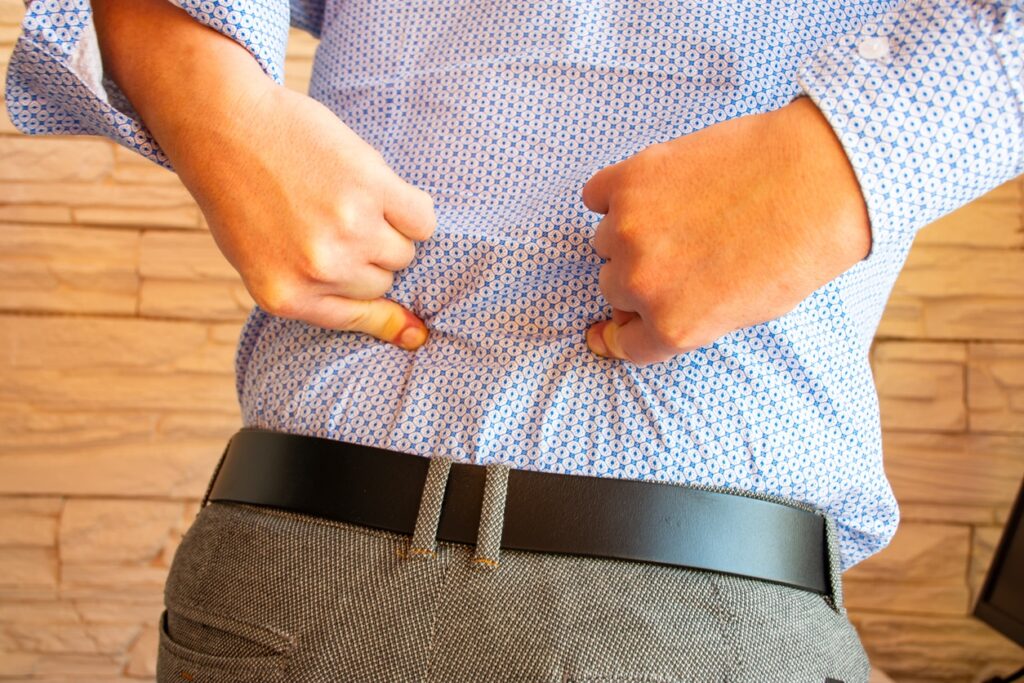
What Is A Bulging Disc?
A bulging disc occurs when a degenerative disc between two vertebrael bodies becomes compressed and bulges away from its original position. Bulging discs differ from herniated discs. A disc herniation occurs when softer interior disc material pushes through cracks in the outer disc layers. A bulging disc, by contrast, occurs when the entire disc degenerates and becomes displaced to some degree from its normal boundary.
Bulging discs become problematic when they impinge upon delicate neural structures such as the spinal cord or exiting nerve roots. Pain can occur when the disc places pressure on nerves or when the disc becomes chronically inflamed.
The discs between our vertebraee contain fluid that cushions movement and helps maintain proper spacing. As we age, discs gradually lose fluid, which allows them to flatten and shift outward. While a bulging disc can occur anywhere along the spine, it is most commonly seen in the lumbar (lower back) region.
Bulging discs may also develop due to trauma, such as a car accident, repetitive strain, arthritis, infection, or other degenerative conditions.
Symptoms Of A Bulging Disc
Common symptoms of a bulging disc may include:
- Tingling in the legs or buttocks
- Arm or leg weakness
- Pain in the neck, arms, or lower back
- Numbness in the limbs
Symptoms vary depending on the location of the disc and whether nearby nerves are affected.
How Is A Bulging Disc Diagnosed?
When evaluating back or leg pain, the spine team at Princeton Neurological Surgery begins with a detailed medical history. You may be asked when the pain began, what activities worsen it, whether it radiates into the arms or legs, and what positions relieve or aggravate symptoms.
A physical examination follows to assess:
- Muscle strength and possible atrophy
- Pain with movement or pressure
- Nerve function and reflexes
If further confirmation is needed, diagnostic imaging may be ordered:
- MRI or CT scans to visualize discs, nerves, and spinal alignment
- Discogram, in select cases, to evaluate disc-related pain
Where Are Bulging Discs More Common?
Although any spinal disc can bulge, approximately 90 percent occur in the lumbar spine (L1–L5). This region supports much of the body’s weight and absorbs significant mechanical stress. Bulging discs can also occur in the cervical spine, though they are somewhat less common.
What Is The Difference Between A Bulging Disc And A Herniated Disc?
Spinal discs consist of a tough outer layer surrounding a softer, gel-like center. As discs lose moisture with age, the outer layer may bulge outward fairly evenly around its circumference. A bulging disc typically involves at least half of the disc’s border.
A herniated disc occurs when the outer layer tears, allowing inner material to protrude outward. Herniated discs are sometimes referred to as “slipped” or “ruptured” discs, though those terms are not technically precise.
What Happens If A Bulging Disc Is Not Treated?
Many people have bulging discs without symptoms. When nerve compression develops, however, pain can become persistent and progressively limiting.
A bulging disc will not return to its original position on its own. That does not mean surgery is automatically required. Conservative treatment is typically the first step and may include:
- Core strengthening exercises
- Postural training
- Anti-inflammatory medications
- Physical therapy
- Bracing or other supportive therapies
If untreated nerve compression progresses, chronic pain, weakness, or functional limitations may develop. In rare cases, prolonged nerve compression can lead to permanent damage.
How Will I Know If Surgery Is Necessary?
Surgery is considered when conservative treatments fail to relieve persistent pain or when neurologic symptoms worsen. Progressive weakness, significant numbness, or loss of function in the legs or feet may indicate the need for surgical decompression to protect nerve function.
The surgical team led by Dr. Edward H. Scheid, Jr. carefully evaluates each case to determine whether surgery is appropriate and which approach is most effective.

Treatment And Surgery For Bulging Disc
Initial treatment typically includes rest, anti-inflammatory medications, and physical therapy focused on strengthening the supporting muscles of the spine.
Spinal steroid injections may be recommended in some cases to reduce inflammation and relieve nerve irritation.
If symptoms persist despite conservative care, surgical options may be considered. These procedures aim to decompress the affected nerve and may include:
- Microdiscectomy
- Laminectomy
- Removal of disc material causing compression
If an entire disc must be removed, a fusion procedure or artificial disc replacement may be recommended to maintain spinal stability. Treatment recommendations are individualized based on imaging findings, symptoms, and overall spinal health.
What Is Recovery Like After Surgery For A Bulging Disc?
Recovery depends on the procedure performed. Minimally invasive decompression surgeries typically involve smaller incisions and shorter recovery periods compared to traditional open surgery.
Patients are encouraged to walk soon after surgery, and activity restrictions are gradually lifted as healing progresses. The surgical team provides individualized recovery guidelines based on the specific procedure performed.
Will I Need Treatment Again In The Future?
Decompression spine surgery has high success rates, with most patients experiencing meaningful relief from chronic nerve-related pain. However, spinal degeneration can continue over time, and new disc issues may develop in other areas of the spine.
Maintaining core strength, proper body mechanics, and overall spinal health can help reduce future risk.
Why Choose Princeton Neurological Surgery For Bulging Disc Treatment?
Choosing the right surgical team is essential when nerve compression affects your mobility and quality of life. Princeton Neurological Surgery is led by board-certified neurosurgeon Dr. Edward H. Scheid, Jr., who has performed more than 6,000 spine surgeries and specializes in both minimally invasive and complex spinal procedures. Our team prioritizes precise diagnosis, advanced imaging review, and individualized treatment planning. Whenever possible, conservative care is pursued before surgery is considered. When surgical intervention is necessary, techniques are selected to preserve neurologic function and restore spinal stability while supporting long-term outcomes.
Schedule A Consultation In Hamilton, NJ
We welcome patients at our convenient New Jersey office locations in Hamilton, Paramus, Edison, North Bergen, Jersey City, and Mount Laurel, making it easier to access expert spine care close to home.
If you are experiencing symptoms of a bulging disc, contact Princeton Neurological Surgery in Hamilton, NJ to schedule a consultation and discuss your treatment options.