
Cervical disc replacement surgery is designed to relieve neck and arm symptoms caused by damaged cervical discs while preserving motion in the spine. Although many patients benefit from cervical disc arthroplasty, some continue to experience persistent pain, neurologic symptoms, or new complications that require further evaluation. In these cases, revision surgery may be necessary to correct the underlying problem and restore stability and nerve function.
At Princeton Neurological Surgery, patients are evaluated by a neurosurgical team led by board-certified neurosurgeon Dr. Edward H. Scheid, Jr. With more than 6,000 successful spine surgeries and extensive experience in complex and reoperative spine procedures, our team takes a careful, step-by-step approach to diagnosing failed cervical disc replacement. Patients in Hamilton and Jersey City, NJ trust our practice for thorough evaluation, individualized treatment planning, and advanced surgical expertise when prior spine surgery has not delivered the expected relief.
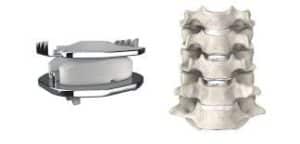
What Is Degenerative Disc Disease?
Despite its name, degenerative disc disease is not a disease but a term used to describe the gradual breakdown of spinal discs. These discs sit between the vertebraee and allow the spine to move smoothly while absorbing shock.
Over time, discs may lose fluid content, reducing flexibility and cushioning. Tears may develop in the outer layer of the disc, which can cause bulging or rupture. Degenerative disc disease most commonly affects the cervical (neck) and lumbar (lower back) regions of the spine.
What Is Cervical Disc Replacement Surgery?
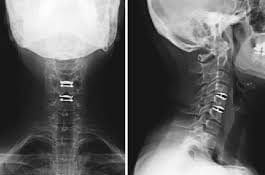
Cervical disc replacement surgery, also known as cervical disc arthroplasty, is a procedure in which a damaged cervical intervertebrael disc is removed and replaced with a mechanical artificial disc. These devices are typically made from titanium combined with other materials.
Although the artificial disc may lack some of the absorptive qualities of a biological disc, it allows for natural motion at the spinal segment between two vertebraee. Examples of artificial cervical discs include:
- Mobi-C
- Prestige LP
- Prodisc-C
Why Is Cervical Disc Replacement Surgery Performed?
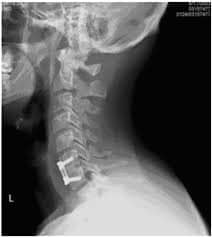
Cervical disc replacement may be performed to remove a herniated intervertebrael disc that compresses the nerve roots traveling to the upper extremities. It may also be used to replace a degenerative cervical disc that causes debilitating neck pain and contributes to stenosis, or narrowing of the bony canal through which nerve roots exit the spinal cord.
Compression of the nerve roots may result in:
- Numbness
- Tingling
- Weakness
- Radiating arm pain
Alternatives to Cervical Disc Replacement Surgery
A damaged cervical disc can also be removed and replaced with a bone plug or allograft to achieve fusion of two cervical vertebraee. Cervical fusion is the classic surgical treatment for many cervical spine conditions. Cervical disc arthroplasty was developed to maintain natural motion between two cervical vertebraee. It is believed that preserving motion may help prevent adjacent segment disease, which can occur after fusion.
However, the decision to use an artificial cervical disc remains controversial. Conserving motion within the vertebrael segment may help prevent adjacent-level disease, particularly when the adjacent level is already degenerated. At the same time, preserving motion may allow continued degenerative changes or eventual hardware failure within the treated segment.
What Are the Potential Complications of Cervical Disc Replacement Surgery?
Artificial cervical disc surgery is performed to treat spinal conditions while preserving mobility. However, maintaining motion in a degenerative segment may permit continued degeneration over time.
Motion itself can contribute to degenerative changes that lead to:
- Degenerative disc disease
- Facet arthropathy
- Spinal stenosis
Some patients do not tolerate the artificial disc within the intervertebrael disc space. The presence of a foreign body can create chronic irritation and inflammation. Patients may experience:
- Persistent neck pain
- Numbness
- Tingling
- Weakness
Others report new symptoms that were not present before surgery, such as:
- Jaw or facial pain
- Cervical headaches
- Activity-related neck and upper extremity pain
What Are the Treatment Options for Failed Cervical Disc Replacement Surgery?
When cervical disc replacement surgery fails, treatment options generally include anterior revision surgery or posterior fusion.
Many surgeons address the problem by performing a posterior fusion. While this may stabilize the spinal segment, it does not remove the artificial disc and may not fully address residual or recurrent stenosis compressing the spinal cord or nerve roots.
Using the anterior approach, the surgeon works through the prior incision. The artificial disc is removed, the disc space is cleaned, and the neural elements are decompressed. A bone plug is then placed, allowing the two vertebrael bodies to fuse together. This eliminates motion at the segment and helps prevent further degenerative changes.
Revision surgery using the anterior approach is technically demanding. Many spine surgeons lack the experience or comfort level necessary to correct failed artificial cervical disc surgery through the original anterior incision.
At Princeton Neurological Surgery, our neurosurgical team has extensive experience evaluating and managing complex and reoperative spine conditions, including failed cervical disc arthroplasty. Patients are often relieved to learn that there may still be effective options available to address their ongoing symptoms.
Why Choose Princeton Neurological Surgery for Cervical Disc Replacement Revision?
Revision spine surgery requires experience, precision, and thoughtful clinical judgment. Princeton Neurological Surgery is led by board-certified neurosurgeon Dr. Edward H. Scheid, Jr., who has performed more than 6,000 successful spine surgeries and specializes in complex and reoperative spine procedures. Our team follows a careful, step-by-step diagnostic process to identify the true source of persistent symptoms before recommending additional surgery. With advanced neurosurgical training and a commitment to improving spine surgery safety, we provide individualized treatment plans focused on restoring neurologic function and long-term quality of life for patients in Hamilton and Jersey City.
We welcome patients at our convenient New Jersey office locations in Hamilton, Paramus, Edison, North Bergen, Jersey City, and Mount Laurel, making it easier to access specialized cervical revision spine care close to home.
Advanced Cervical Revision Surgery in Hamilton, NJ
If you are experiencing persistent or new symptoms after cervical disc replacement surgery, contact Princeton Neurological Surgery in Hamilton, NJ today at (609) 890-3400 to schedule your consultation and learn more about your revision options.