
Radiculopathy is a condition that occurs when a nerve root becomes irritated, inflamed, or compressed as it exits the spinal column. Nerve roots branch off the spinal cord and travel into the arms and legs, carrying signals that control movement and sensation. When one of these nerve roots malfunctions, it can cause pain, numbness, tingling, or weakness along the path of that nerve.
At Princeton Neurological Surgery, patients in Hamilton, NJ and Jersey City receive comprehensive evaluation and treatment for radiculopathy and related spinal conditions. The practice is guided by the leadership of Dr. Edward H. Scheid, Jr., a board-certified neurosurgeon who has performed more than 6,000 successful spine surgeries. Using a precise and individualized diagnostic approach, the team works to identify the underlying cause of nerve root dysfunction and develop a treatment plan tailored to each patient’s needs.

Radiculopathy Vs. A Pinched Nerve
The terms “radiculopathy” and “pinched nerve” are often used interchangeably. In many cases, radiculopathy results from direct compression of a nerve root. However, nerve root dysfunction can also occur without mechanical compression.
When inflammation rather than compression is responsible, the more specific term “radiculitis” may be used. Nerve root irritation may be caused by:
- Infection
- Trauma
- Neoplasm
- Diabetes
- Arthritis
- Inflammatory conditions
Accurate diagnosis helps determine whether symptoms are due to compression, inflammation, or another underlying issue.
Types of Radiculopathy
Common Causes Of Radiculopathy
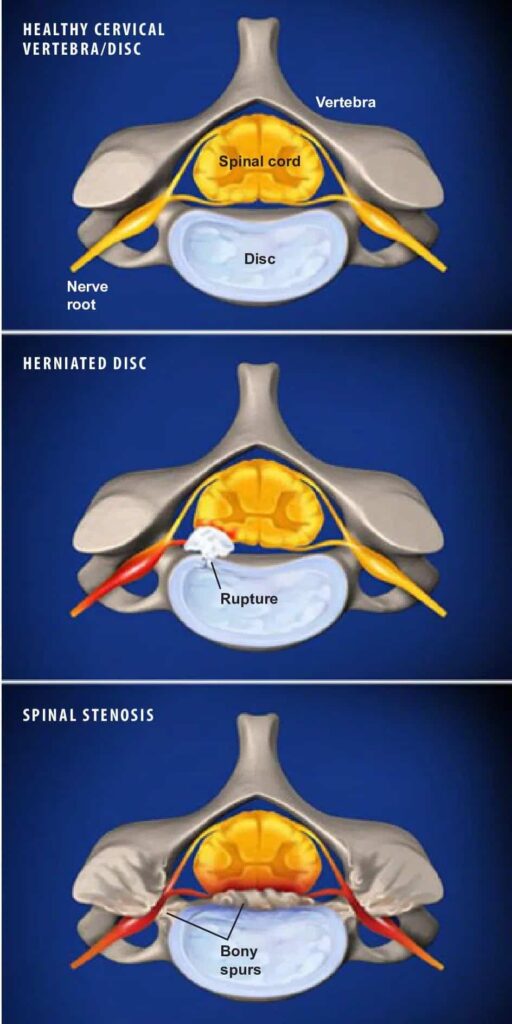
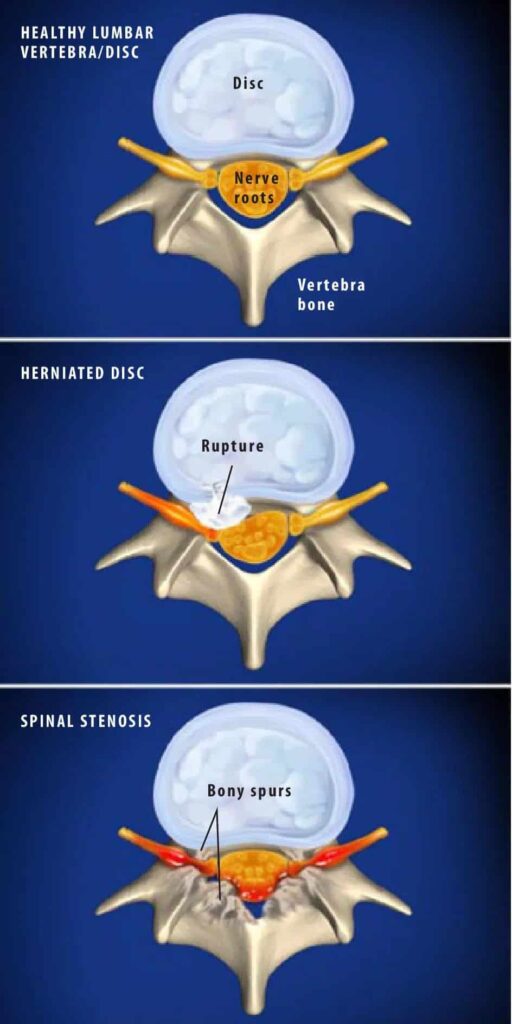
One of the most frequent causes of radiculopathy is disc herniation. A herniated disc occurs when the inner core of a spinal disc protrudes outward and presses on a nearby nerve root.
Other potential causes include:
- Bone spurs
- Disc bulges
- Spondylolisthesis, or spinal instability
- Spinal fractures
- Spinal tumors
- Degenerative disc disease
Radiculopathy most commonly occurs in the cervical (neck) and lumbar (lower back) regions because these areas are more mobile and subject to wear and tear.
Signs And Symptoms Of Radiculopathy
Symptoms depend on which nerve root is affected and whether the problem is in the neck or lower back.
Common signs and symptoms include:
- Pain radiating along the distribution of the affected nerve
- Dermatomal sensory disturbances
- Muscle weakness in areas supplied by the nerve
- Reduced or absent reflexes
Cervical radiculopathy may cause symptoms in the shoulder, arm, or hand. Lumbar radiculopathy often results in leg pain, commonly referred to as sciatica.
If weakness progresses or sensation diminishes significantly, prompt neurosurgical evaluation is recommended to prevent long-term nerve damage.
Treatment Options For Radiculopathy
In many cases, nonsurgical treatment can successfully relieve symptoms. Conservative care may include:
- Physical therapy
- Anti-inflammatory medications
- Corticosteroids
- Image-guided steroid injections
- Temporary use of soft cervical collars when neck symptoms are present
The goal of conservative treatment is to reduce inflammation, relieve pressure on the nerve root, and restore function.
Surgery may be recommended when:
- Conservative therapies fail to relieve symptoms
- Weakness is present
- Pain becomes intractable and limits daily function
- Progressive sensory loss develops
When nerve compression is clearly identified on imaging, surgical decompression may provide more definitive and timely relief. Early intervention may help prevent permanent neurological deficits.
Your provider will carefully evaluate clinical findings and imaging studies before recommending surgery.
Why Choose Princeton Neurological Surgery For Radiculopathy Treatment?
Princeton Neurological Surgery is guided by the expertise of Dr. Edward H. Scheid, Jr., a board-certified neurosurgeon and President and Founder of NeuroSpine Plus, LLC. With more than 6,000 spine surgeries performed, the practice has extensive experience diagnosing and treating nerve root disorders in the cervical and lumbar spine.
What distinguishes the team is its deliberate, step-by-step methodology. Each patient undergoes a comprehensive evaluation to determine the precise cause of nerve root dysfunction before a customized treatment plan is developed. Advanced techniques, including minimally invasive spine surgery when appropriate, are utilized to relieve nerve compression while preserving spinal stability. Patients in Hamilton and Jersey City benefit from experienced, patient-centered care close to home.
Radiculopathy Treatment In Hamilton, NJ
Radiculopathy can significantly affect comfort, mobility, and quality of life. Early diagnosis and appropriate treatment help relieve nerve irritation and prevent long-term neurological impairment.
We welcome patients at our convenient New Jersey office locations in Hamilton, Paramus, Edison, North Bergen, Jersey City, and Mount Laurel, making it easier to access expert spine care close to home.
Princeton Neurological Surgery provides advanced spine care in Hamilton, NJ and serves patients from Jersey City and surrounding communities. To schedule a consultation, call Princeton Neurological Surgery in Hamilton, NJ at (609) 890-3400 today.