
Transforaminal lumbar interbody fusion (TLIF) is a surgical procedure used to relieve persistent lower back pain caused by spinal instability, nerve compression, or disc degeneration. While TLIF can sometimes be performed using minimally invasive techniques, certain spinal conditions require a traditional open approach to allow for full visualization and correction of complex pathology.
At Princeton Neurological Surgery, TLIF procedures are performed by a neurosurgical team led by board-certified neurosurgeon Dr. Edward H. Scheid, Jr., who has performed more than 6,000 spine surgeries. Patients in Hamilton and Jersey City, NJ benefit from careful surgical planning that determines whether a minimally invasive or traditional open approach will provide the safest and most effective long-term outcome.
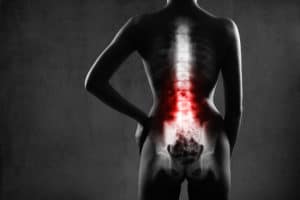
What Is Transforaminal Lumbar Interbody Fusion (TLIF)?
TLIF is a fusion technique designed to stabilize the lumbar spine and relieve pressure on compressed nerves. “Transforaminal” refers to accessing the spine through the foramen — the natural opening where nerve roots exit the spinal canal. “Interbody fusion” refers to removing a damaged intervertebrael disc and replacing it with a bone spacer, allowing the adjacent vertebraee to fuse together into a single solid structure.
This approach allows for placement of graft material while minimizing direct manipulation of nerve roots. TLIF is often chosen because it provides strong stabilization and allows for thorough decompression of the affected level.
What Conditions Does TLIF Treat?
Traditional TLIF surgery may be recommended for:
- Nerve compression
- Disc space collapse
- Spondylolisthesis
- Degenerative disc disease
- Spinal instability
- Recurrent disc herniation
- Failed prior decompression procedures
MRI and CT imaging are used to evaluate spinal alignment, nerve compression, and structural instability before surgery is recommended.
TLIF Vs. PLIF
TLIF is similar to posterior lumbar interbody fusion (PLIF), but the approaches differ. In TLIF, the surgeon typically removes the pars interarticularis in addition to portions of the lamina. This creates a larger working space to place bone graft material without excessive pressure on nerve roots.
Because TLIF accesses the spine from one side rather than the midline, it may reduce certain risks associated with bilateral nerve retraction. The surgical strategy is selected based on spinal anatomy and the patient’s specific pathology.
The Traditional TLIF Procedure
Traditional TLIF is performed under general anesthesia with the patient positioned face down. A 3–6 inch incision is made over the affected area of the lower back to allow direct visualization of the spine. Unlike minimally invasive TLIF, which uses small tubular retractors and muscle-sparing access points, the traditional approach involves a larger incision and careful retraction of the surrounding muscles to provide a broader surgical field.
Muscles are gently retracted to expose the vertebraee, allowing direct access to the spinal structures. Imaging guidance ensures the correct level is targeted. The lamina and pars interarticularis are removed to clearly visualize the nerve roots. The damaged disc, bone spurs, and compressive debris are then removed to relieve pressure on the nerves.
This wider exposure can be beneficial in more complex cases, including multi-level disease, significant instability, prior surgery, or extensive nerve compression, where maximum visualization is necessary.
To stabilize the spine, a bone graft or bone morphogenetic protein (BMP) may be placed into the disc space. Two spacers containing graft material are often positioned within the interbody space to restore alignment and disc height. Metal rods and screws are attached as needed to hold the vertebraee securely while fusion occurs.
Once proper placement is confirmed, the incision is closed with sutures or staples. Surgery typically lasts between three and six hours depending on the complexity of the case.
Why An Open Approach May Be Necessary
While minimally invasive TLIF can be effective for select patients, traditional open TLIF may be preferred when:
- There is significant spinal instability
- Multiple levels require correction
- Prior surgery has altered anatomy
- Extensive decompression is necessary
- Visualization of complex structures is critical
Direct visualization allows the surgeon to address more advanced pathology and achieve thorough decompression when needed.
Recovery After Traditional TLIF
Patients typically remain in the hospital for three to five days following traditional TLIF surgery. Early walking is encouraged to promote circulation and reduce the risk of blood clots.
For several weeks, patients must avoid lifting, bending at the waist, and twisting the torso. A structured physical therapy program often begins shortly after discharge to restore strength and mobility.
Many patients return to non-strenuous work within two to three weeks, although more physically demanding jobs may require a longer recovery period. Clearance for sports and heavier activity typically occurs around three months, depending on healing progress and the number of levels fused.
Bone fusion continues to mature over several months.
What Must Be Removed During TLIF?
To perform interbody fusion, the deteriorated intervertebrael disc is removed. The disc space is then restored with a spacer measured to maintain proper spinal alignment and nerve pathway clearance. Aside from the disc and specific portions of bone required for decompression, surrounding structures are preserved whenever possible.
Risks Associated With TLIF
Although TLIF is considered safe and effective, it remains a major spinal procedure. Potential risks include:
- Infection
- Bleeding
- Nerve injury
- Blood clots
- Hardware failure
- Graft failure or nonunion
All risks are discussed thoroughly during consultation and preoperative planning.
Will TLIF Surgery Affect My Lifestyle?
TLIF has a high success rate, with many patients experiencing significant relief from pain caused by nerve compression and instability. After recovery and rehabilitation, most patients are able to resume normal daily activities. Long-term lifestyle outcomes depend on the extent of spinal degeneration, overall health, and adherence to post-operative guidance.
Why Choose Princeton Neurological Surgery For TLIF Surgery?
Spinal fusion requires precision, experience, and sound judgment regarding surgical approach. Princeton Neurological Surgery is led by board-certified neurosurgeon Dr. Edward H. Scheid, Jr., who has performed more than 6,000 spine surgeries and treats a wide range of lumbar spine conditions. Our team evaluates each case carefully to determine whether a minimally invasive or traditional open TLIF approach is most appropriate. We prioritize thorough decompression, stable fusion, and long-term neurologic preservation to help patients regain mobility and quality of life. Patients in Hamilton and Jersey City trust our practice for advanced spine care tailored to their specific condition.
TLIF Surgery Consultation In Hamilton, NJ
We welcome patients at our convenient New Jersey office locations in Hamilton, Paramus, Edison, North Bergen, Jersey City, and Mount Laurel, making it easier to access expert spine care close to home.
If persistent lower back pain or spinal instability is limiting your daily activities, Princeton Neurological Surgery in Hamilton, NJ serves patients from Hamilton and Jersey City—call (609) 890-3400 to schedule your consultation and determine whether TLIF surgery may be right for you.