
Anterior Lumbar Interbody Fusion (ALIF) is a surgical procedure used to treat chronic lower back pain caused by degenerative disc disease, spinal instability, spondylolisthesis, and certain recurrent disc herniations. By approaching the spine through the front of the body, ALIF allows direct access to the damaged disc space while avoiding disruption of the back muscles. This approach can restore spinal alignment, stabilize the affected segment, and relieve pain caused by motion at a degenerated level.
At Princeton Neurological Surgery, patients receive comprehensive spine care from a neurosurgical team led by board-certified neurosurgeon Dr. Edward H. Scheid, Jr. With more than 6,000 successful spine surgeries and extensive experience treating complex lumbar conditions, our team follows a careful, step-by-step diagnostic process before recommending fusion. Patients in Hamilton and Jersey City, NJ trust our practice for individualized treatment plans designed to restore stability and improve long-term function.
What is ALIF Surgery?
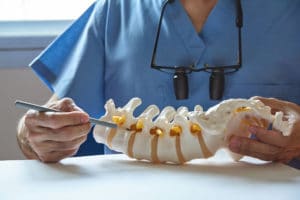
ALIF is performed on the lumbar spine, most commonly at the L4-L5 and L5-S1 levels. During the procedure, the damaged disc is removed and replaced with an interbody cage filled with bone graft material. This spacer restores disc height and creates the proper environment for the two adjacent vertebraee to fuse together over time.
Because the spine is accessed through the abdomen, the large back muscles and spinal nerves are not disturbed. This anterior approach allows for placement of a larger interbody implant, which can improve stability and help restore normal spinal alignment. In some cases, additional posterior instrumentation may be recommended to provide further support depending on the patient’s anatomy and the degree of instability.
Conditions Treated With ALIF
ALIF may be recommended for patients experiencing persistent lower back pain caused by:
- Degenerative disc disease
- Spondylolisthesis
- Lumbar spinal instability
- Recurrent disc herniation
- Foraminal narrowing affecting nerve roots
Most candidates for ALIF have already completed conservative treatment such as physical therapy, activity modification, medications, or spinal injections without sufficient relief. When chronic pain begins to interfere with daily function and quality of life, surgical stabilization may be considered.
The ALIF Procedure
ALIF is performed under general anesthesia. An incision is made in the lower abdomen to access the spine. The damaged disc material is removed, the disc space is prepared, and an interbody cage containing bone graft is inserted. Over the following months, the bone graft promotes fusion between the vertebraee, eliminating painful motion at that segment.
Surgical planning is individualized based on imaging studies, spinal alignment, bone quality, and overall health. Careful technique and thorough preparation are critical to achieving a successful fusion.
ALIF Recovery
Patients are typically encouraged to begin walking shortly after surgery to promote circulation and healing. Activity levels are gradually increased over several weeks, while heavy lifting and strenuous activity are restricted during early recovery.
Initial postoperative discomfort is expected, but because the back muscles are not divided during the anterior approach, many patients experience less muscular pain compared to traditional posterior fusion procedures. Full fusion develops gradually over several months, and follow-up imaging is used to monitor healing progress.

Potential Risks And Considerations
As with any surgical procedure, ALIF carries potential risks, including infection, bleeding, injury to nearby structures, incomplete fusion, or persistent symptoms. Proper patient selection, detailed imaging review, and surgical expertise help reduce these risks and improve outcomes.
A comprehensive evaluation ensures that fusion is appropriate and that non-surgical options have been carefully considered before proceeding.
Are You a Candidate for ALIF Surgery?
ALIF may be recommended for patients with confirmed degenerative disc disease or spinal instability who continue to experience chronic lower back pain despite conservative treatment. Ideal candidates have symptoms that clearly correlate with imaging findings and have not achieved lasting relief from physical therapy, medications, activity modification, or spinal injections.
Good overall health and adequate bone quality are important for successful fusion. At Princeton Neurological Surgery, candidacy is determined through a careful, step-by-step evaluation to ensure that the affected lumbar segment is truly the source of pain before surgery is recommended.
Why Choose Princeton Neurological Surgery For ALIF?
Successful lumbar fusion requires both technical precision and thoughtful clinical judgment. Princeton Neurological Surgery is led by board-certified neurosurgeon Dr. Edward H. Scheid, Jr., who has performed more than 6,000 spine surgeries and specializes in complex spinal conditions. Our team takes a step-by-step approach to identifying the true source of pain before recommending surgery, ensuring that fusion is reserved for patients who truly need it.
With advanced neurosurgical training and a commitment to improving spine surgery safety, we provide individualized treatment plans focused on restoring spinal stability, preserving neurologic function, and helping patients return to active, productive lives.
Anterior lumbar interbody fusion FAQs
ALIF Spinal Surgery In Hamilton, NJ
If chronic lower back pain is limiting your mobility or affecting your quality of life, Princeton Neurological Surgery in Hamilton, NJ is here to help patients throughout Hamilton and Jersey City—call (609) 890-3400 today to schedule your consultation and learn whether ALIF spinal surgery may be right for you.